Hyundai Designates Tamil Nadu as Flagship EV Hub
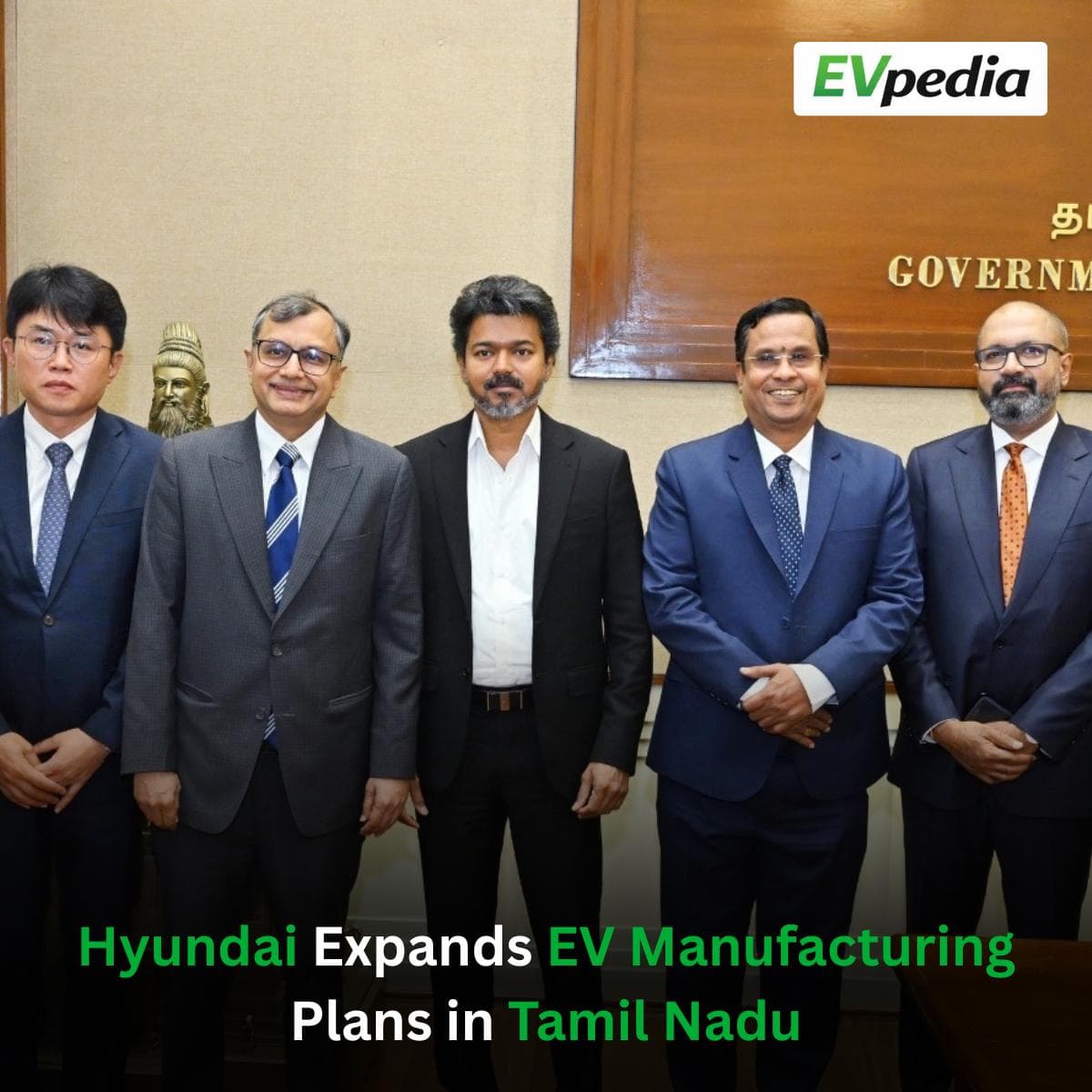
In a major development for the South Asian clean mobility landscape, Hyundai Motor India Limited (HMIL) has officially cemented its long-term automotive roadmap by designating Tamil Nadu as its primary manufacturing and development flagship hub for Electric Vehicles (EVs). Backed by a massive strategic capital commitment of over ₹26,000 crore allocated between 2023 and 2032, the automotive giant is setting the stage for vertical integration, heavy domestic localization, and multi-model clean transport expansion.
This localized financial blueprint constitutes a dominant share of Hyundai’s overarching ₹45,000 crore pan-India mobility investments. By anchoring its key future architectures to its high-capacity Sriperumbudur manufacturing facility near Chennai, the brand aims to drastically reduce component import dependencies while accelerating India’s domestic EV transition.
The HE1i Strategy: Mass-Market SUV Aggression
At the forefront of this industrial push is an upcoming product onslaught tailored explicitly for the domestic market. Tarun Garg, Managing Director and Chief Executive Officer of HMIL, confirmed that the company will roll out two new SUV models from its Chennai facility within this year. Crucially, one of these models will be Hyundai’s first-ever dedicated mass-market electric vehicle, positioned within the highly competitive compact SUV segment under the internal code 'HE1i'.
The upcoming mass-market EV is designed to enter a high-volume segment, directly challenging incumbents such as the Tata Nexon EV and Mahindra XUV 3XO EV. To achieve pricing parity and financial sustainability, the manufacturing facility is undergoing a significant capacity enhancement, scaling its total annual production baseline from 775,000 units to 850,000 units. This structural scale is intended to cater to both booming domestic demand and high-volume emerging export markets across Africa, Asia, the Middle East, and Latin America.
Driving 90% Localization and Upstream Sourcing
To insulate its operations from volatile global supply chains, Hyundai is shifting from an efficiency-only assembly paradigm to a deep localized component footprint. The manufacturer has already established Tamil Nadu’s first operational battery sub-assembly plant for EV powertrains and is actively localizing power electronics alongside other critical tier-1 electric elements.
Hyundai currently operates at an 82% localization level across its vehicles but has set a firm mandate to scale this figure to 90% over the next five to six years. To fuel this transition, HMIL is enhancing its purchasing value from regional suppliers by an additional ₹4,000 crore. This targeted upstream investment is structurally projected to create nearly 2,000 new direct and indirect manufacturing jobs across the state, heavily reinforcing Tamil Nadu's position as India's premier automotive corridor.
Charging Networks and the December 2027 Skills Push
Recognizing that physical infrastructure is the ultimate catalyst for mass EV adoption, Hyundai is simultaneously addressing range anxiety. The manufacturer currently operates 39 DC fast-charging stations consisting of 78 distinct charging points across the state. Over the next two to three years, HMIL will aggressively deploy additional high-capacity charging hubs across major urban centers and crucial national highway expressways.
Complementing its physical infrastructure, Hyundai has finalized an exclusive skill-development alliance with the Government of Tamil Nadu. Slated to formally commence operations in December 2027, the comprehensive public-private partnership will train local youth across Industrial Training Institutes (ITIs), polytechnics, and engineering colleges. The specialized curriculum focuses heavily on advanced smart factory operations, covering electric vehicle technologies, hydrogen mobility systems, automation, robotics, and artificial intelligence-enabled manufacturing. By training a future-ready technical workforce, the initiative aims to enhance the global employability of the state’s youth while reinforcing India's long-term manufacturing competitiveness.