amara raja ev cell bulk production 027 gigafactory roadmap
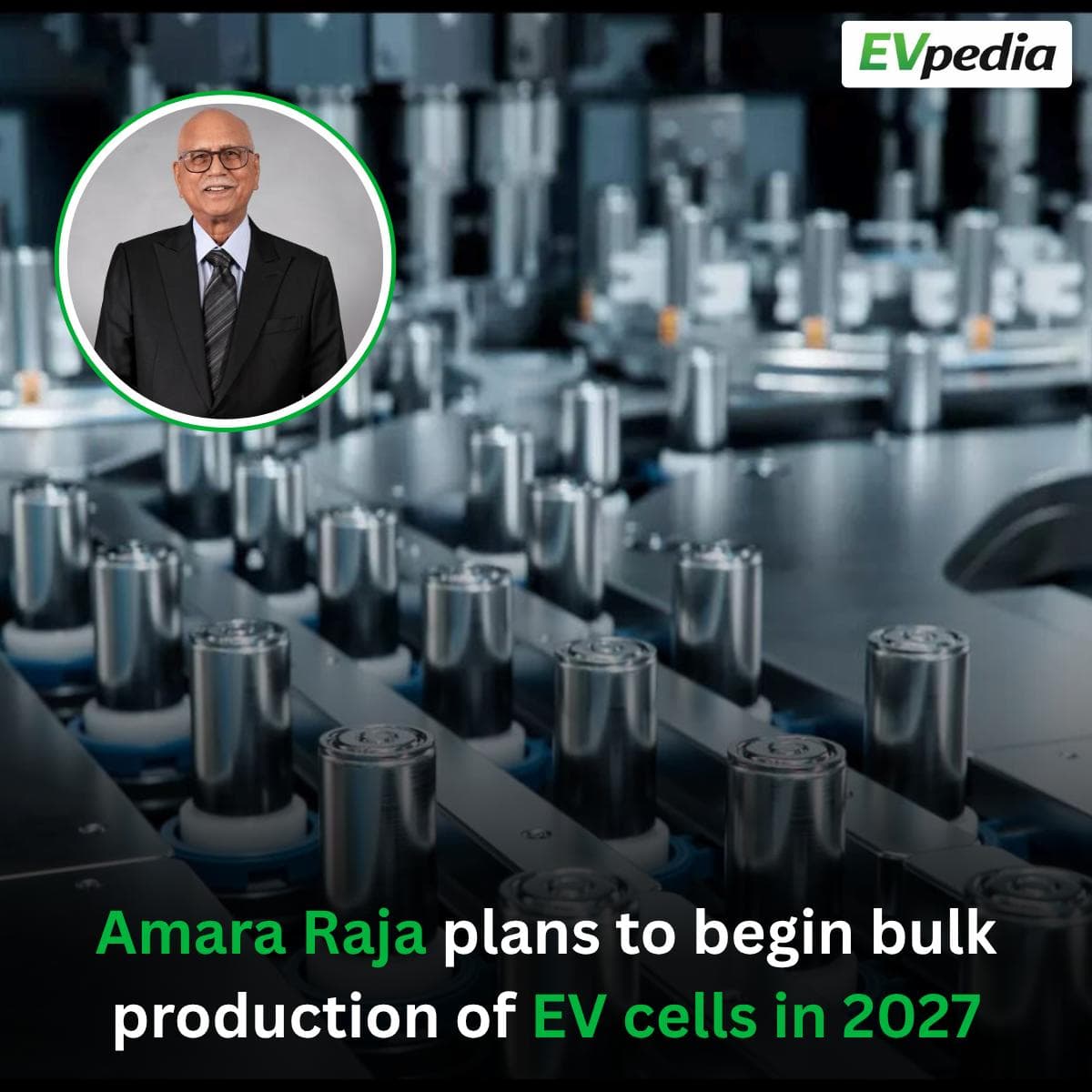
India’s transition toward energy independence has received a significant boost as Amara Raja Energy & Mobility (ARE&M) confirmed its timeline for large-scale Lithium-ion cell manufacturing. The company, a long-standing leader in the industrial and automotive battery space, plans to start bulk production of EV cells in 2027, following an intensive period of testing and validation. The ₹10,000 Crore "Giga Corridor" At the heart of this transition is the Amara Raja Giga Corridor in Telangana. Spanning over 260 acres in Mahbubnagar, this facility represents a long-term commitment of ₹10,000 Crore to build a world-class battery ecosystem. The project is designed with an ultimate capacity goal of 16 GWh for Lithium-ion cells and up to 5 GWh for battery packs. The strategy is one of "gradual scaling." In 2026, the company will initiate production at a megawatt-hour (MWh) scale. These initial batches are critical for the qualification process, where electric vehicle OEMs (Original Equipment Manufacturers) will test the cells for safety, efficiency, and longevity before committing to bulk purchase agreements. Optimizing Chemistry for the Indian Subcontinent One of the most significant aspects of Amara Raja's entry into the cell market is its focus on proprietary chemistries. Through its subsidiary, Amara Raja Advanced Cell Technologies (ARACT), the company is developing multi-chemistry solutions including: NMC (Nickel Manganese Cobalt): Aimed at high-energy applications like electric cars and high-performance motorcycles where space and weight are at a premium. LFP (Lithium Iron Phosphate): Favored for its superior thermal stability and long cycle life, making it the "gold standard" for electric buses and budget-friendly two-wheelers in India’s hot climate. By developing these cells in-house, Amara Raja aims to reduce the "import premium" and the inherent supply chain risks associated with relying on East Asian manufacturers. Strategic Diversification While the electric two-wheeler segment is the primary target for early production, Amara Raja is implementing a "demand de-risking" strategy. The company has revised its plans to allocate capacity equally between Mobility and Energy Storage Systems (ESS). With India’s rapid expansion of 5G towers and renewable energy integration into the grid, the demand for stationary storage is skyrocketing. Amara Raja has already deployed nearly 1 GWh of lithium-based storage across 50,000 telecom sites, providing a ready-made market for its future cell production. The Economic Reality: The "Make in India" Premium The road to 2027 is not without hurdles. Industry analysts suggest that locally manufactured cells may initially be at least 15% more expensive than imported counterparts. This is due to the nascent state of the domestic raw material supply chain (active materials, foils, and separators). However, Amara Raja’s leadership believes that once production hits the 8-10 GWh threshold, the economies of scale will kick in, making "Make in India" batteries competitive on a global scale. Conclusion Amara Raja’s move marks a coming-of-age moment for the Indian automotive industry. As the company moves from a 2 GWh pilot phase toward a 16 GWh future, it is not just building a factory; it is building the foundation for a self-reliant electric mobility ecosystem.