Pune-based deep-tech startup Rechargion Energy has officially achieved IEC 62660 compliance
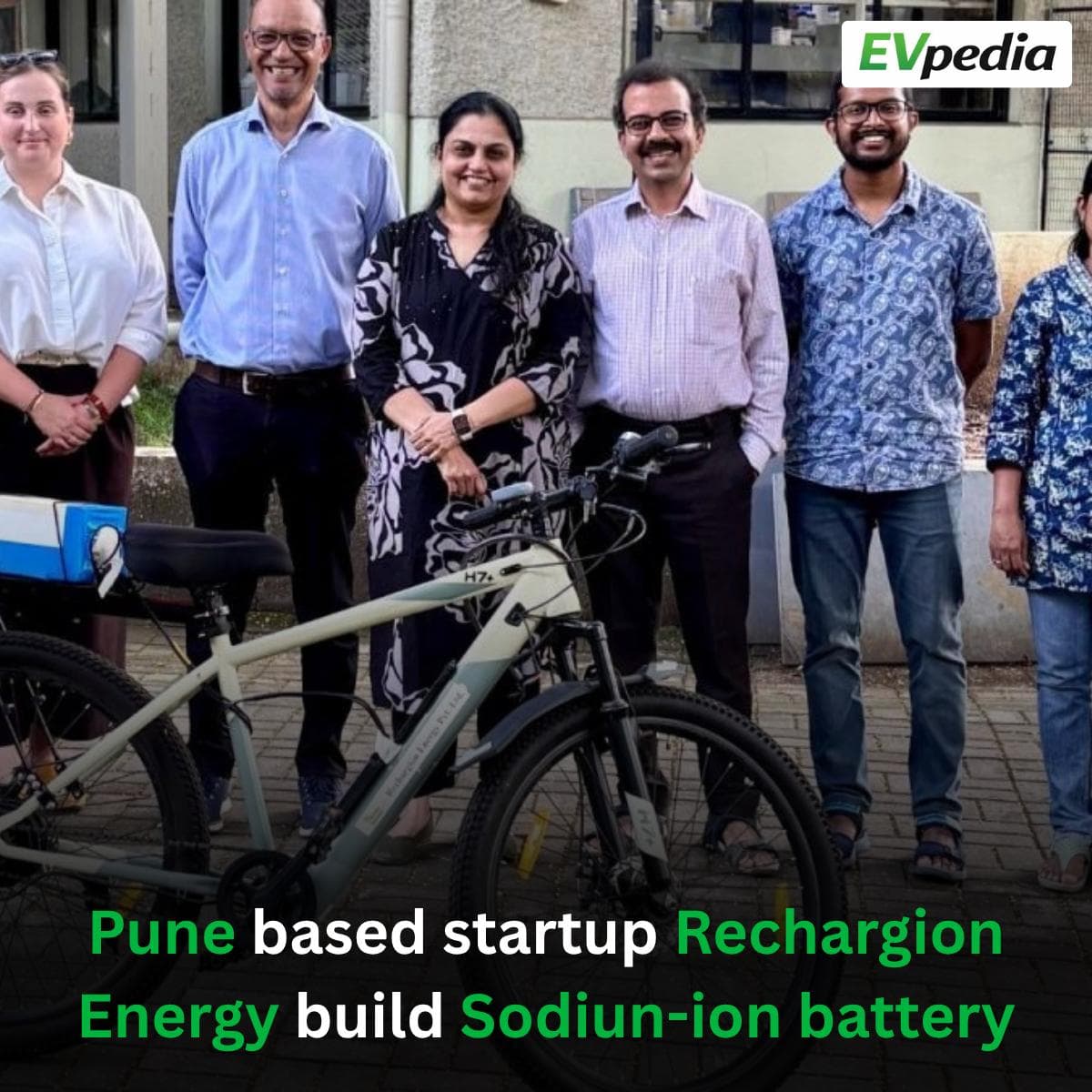
The quest for a sustainable, localized battery supply chain in India has reached a significant milestone. Rechargion Energy, a spin-out from the CSIR-National Chemical Laboratory, has announced that its proprietary Sodium-ion (Na-ion) battery cells have successfully passed validation testing as per IEC 62660 standards.A Major Win for Domestic InnovationThe IEC 62660 standard is a globally recognized benchmark for the performance, reliability, and abuse testing of secondary cells used for the propulsion of electric road vehicles. By securing this compliance through the Automotive Research Association of India (ARAI), Rechargion Energy has demonstrated that Sodium-ion technology is no longer just a theoretical alternative but a commercially viable, safe, and robust solution for the EV sector.Unlike traditional Lithium-ion batteries (Li-ion) that rely on resource-intensive materials like Lithium, Nickel, and Cobalt, Na-ion technology uses abundant sodium. For a country like India, which lacks significant lithium reserves, this achievement is a direct path toward Atmanirbhar Bharat in the energy storage space.The Technical Advantage: Why Sodium?Rechargion’s cells utilize a proprietary hard carbon anode and a symmetrical aluminum-aluminum (Al-Al) current collector structure. This design offers several distinct advantages over traditional LFP or NMC chemistries:Thermal Stability: Na-ion cells exhibit better thermal stability, significantly reducing the risk of thermal runaway in high-temperature environments.Logistics Safety: One of the most unique features of Na-ion is its ability to be stored and transported at zero volts. Lithium-ion batteries must maintain a partial charge during transit to prevent damage, which carries an inherent fire risk.Fast Charging & Longevity: The kinetics of sodium-ion movement in hard carbon allows for faster charging rates and better cyclability, particularly in extreme weather conditions ranging from -40°C to 60°C.Market Positioning and ScalabilityWhile Sodium-ion currently has a lower energy density compared to high-end Lithium-ion variants, it is perfectly positioned to disrupt two major segments:The Lead-Acid Replacement: Na-ion offers a significantly better lifespan and performance-to-weight ratio than lead-acid batteries, which still dominate the low-speed 2W and 3W markets.Stationary Storage: For grid-scale energy storage and solar backup, where weight is less of a concern than cost and safety, Na-ion is the clear frontrunner.The Road AheadFounded by Dr. Vilas Shelke, Rechargion Energy has rapidly transitioned from deep-tech research to industrial prototyping. With the IEC 62660 certification in hand, the startup is now focusing on scaling its manufacturing capacity and establishing a domestic supply chain for all raw materials.As the global "Lithium-stress" continues to drive up costs, Rechargion’s success provides a blueprint for how indigenous research can solve global supply chain bottlenecks while making green mobility more affordable for the masses.